Posts

The beauty of elderflowers fades fast
Image
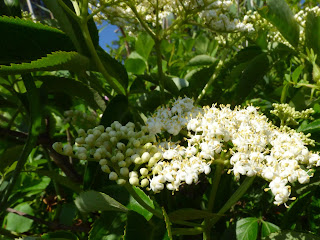
The beauty of elderflowers fades fast   by Sue Pike / the York Weekly/Portsmouth Herald/ Fosters' Daily/ Exeter Herald Jun 20, 2017    As the last days of spring turn to summer, the lyrics to that Rodgers and Hammerstein song, “June is Bustin’ Out All Over,” keep running through my head. A song about how May was full of promises that she didn’t keep and how “the crowd of doubtin’ Thomases was predictin’ that the summer’d never come” ... but it finally has. So, as summer arrives and June winds down, I remember these lines “June is a love song, sweetly sung.” That’s how I feel about my neighborhood. Everything seems to be blooming all at once - the viburnum, the hawkweed and daisies and the grasses in the marsh and meadows. Elderflower blossoms-harvest in early morning. A wonderful native shrub, elderberry, is blooming in my backyard - growing along the edge of the salt marsh, nestled in amongst some beach rose and overly aggressive multif...
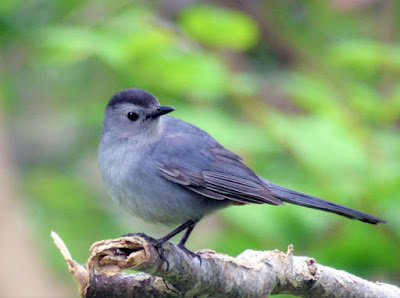
Catbirds: sounds like a cat but doesn't look like a cat

Image
Catbirds: sounds like a cat but doesn't look like a cat  By Sue Pike / yorkweekly@seacoastonline.com   / Foster's Daily / Portsmouth Herald May 31, 2017   Catbirds are plentiful in New England [Sue Pike photo] I was walking down my street, minding my own business, when a mid-sized gray bird flew into the bushes. Instead of disappearing into the shrubbery it hopped out onto a fairly prominent branch and watched me as I watched it. It didn’t fly away, it didn’t run for cover, it just watched me until I walked away up the street. This is typical behavior for gray catbirds - they are inquisitive, vocal birds who don’t seem to mind being around people. Most of my favorite birds are ones whose songs I can identify. The catbird, one of my favorites, is no exception to this rule. They are mimics (related to mockingbirds) - warbling out a jumbled mix of other bird songs along with their most identifiable song, a downward slurring mew - sounds very muc...

The bunny is fine - just back away from the bunny

Image
The bunny is fine - just back away from the bunny By Sue Pike / yorkweekly@seacoastonline.com /Fosters Daily/ the Portsmouth Herald  May 24, 2017      Rescued baby snowshoe hare at the Center for Wildlife in Cape Neddick ME What animal first comes to mind when most of us think of spring? It is often the rabbit. Because of their rapid reproductive rates, rabbits have long been associated with spring - at least in northern seasonal climates where springtime equals lots of baby animals. I visited the Center for Wildlife last week to take a look at some of their rabbit patients. This is the beginning of the mating season for our local rabbits; the rare New England cottontail, the Eastern cottontail and the snowshoe hare. As a result, the Center for Wildlife has been getting lots of phone calls from people who have found baby rabbits that appear to have been abandoned. The big take home message from Kristen Lamb, the executive director of...

Red-winged blackbirds are a sure sign of spring

Image
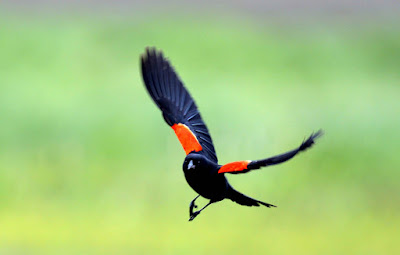
I was down in New York visiting family this past weekend and had a nice preview of what to expect during the upcoming weeks of spring.  Spring! They are a little bit ahead of us down there-still no leaves on the trees but there was green grass in the lawns and dandelions and daffodils blooming.  Robins were fighting over territory in the park.  My aunt was bracing herself for her annual springtime battle with ants in her Manhattan apartment.  Like here I found mud, peepers Male red-winged blackbird defending its territory USFWS Photo and wood frogs calling at night, and one of my favorites, red-winged blackbirds.  Red-winged blackbirds arrived at my neighborhood marsh almost a month ago.  Back before the last set of snow storms.  They are there still but are a bit subdued, perhaps because they’re still waiting for the ladies to arrive.  This is in contrast to further south.  Down in New York mating season is in full swing, the males ...

Taking rhododendrons' temperature

Image
Rhododendrons at 23 degrees      by Sue Pike By Susan Pike Rhododendrons make incredibly accurate living thermometers. When I went for a walk this morning, it felt cold, and I figured it was at least in the teens, but the rhododendron leaves were drooping, not curled. I realized I was being a baby, it had to be warmer than 25 degrees Fahrenheit. Rhododendron leaves respond to the cold, first by drooping and then by curling up - this is called thermonasty. When temperatures are above freezing, typical rhododendron leaves will be flat and oriented horizontally to the ground (presumably to collect as much sunlight as possible). As temperatures drop, the leaves follow suit. When temperatures fall below freezing, the leaves start to droop but remain flat. At 25 degrees F, the leaves start to curl and by 20 degrees F, they are as tightly curled as they can get. The most common native species of rhododendron in New England is great rosebay (Rhododendron maximum...

Orion is an old friend of mine

Image
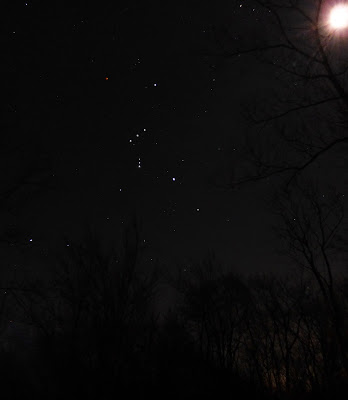
The constellation Orion the Hunter     photo by Sue Pike by Sue Pike yorkweekly@seacoastonline.com published Feb 7 2017 Of the many magical encounters my students and I had on our recent trip to the Cape Eleuthera Institute in the Bahamas, one of the best was a night hike in search of the remnants of a long-abandoned resort at the end of the island. We stopped in the middle of an old road and lay down to look at the stars and listen to the frogs and insects and nocturnal bird noises coming from the surrounding forest. There is almost no light pollution there, the night sky was twinkling with more stars than I have ever seen. We looked for constellations and talked about the myths behind them. I loved this. I grew up with a dad who was a physicist and amateur astronomer. We used to go camping out in remote New Hampshire (we lived in suburban New York where the sky glow from city lights drowned out the night sky) in the fall. We didn't use tents, just lay among the r...

Why the increase in barred owl injuries?

Image
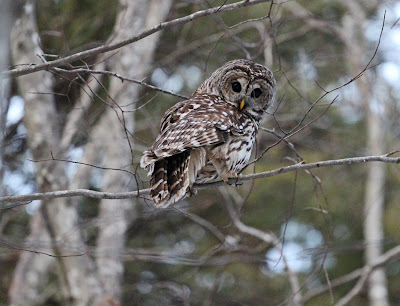
By Sue Pike yorkweekly@seacoastonline.com/The York Weekly/Portsmouth Herald/Exeter Daily/Fosters Daily I visited the Center for Wildlife in Cape Neddick last week because I had heard about an influx of wounded barred owls and was curious to find out why this was happening. According to Kristen Lamb (executive director of the CFW) four barred owls have been brought in over the past few weeks, as well as a handful more in December, more than were brought in last year. This uptick in injured owls seems to be happening throughout New England. Kristen said when she started asking around she found that other wildlife centers have seen more injured owls this year, for instance the Tufts Wildlife Clinic has admitted 18 barred owls in the past couple months. Barred owl looking back at us    by Erin Tuveson Earth Trek Photography Wildlife rehabilitation centers have seen upswings like this before - back in 2008 and 2010 the number of admitted owls was even higher than this y...